

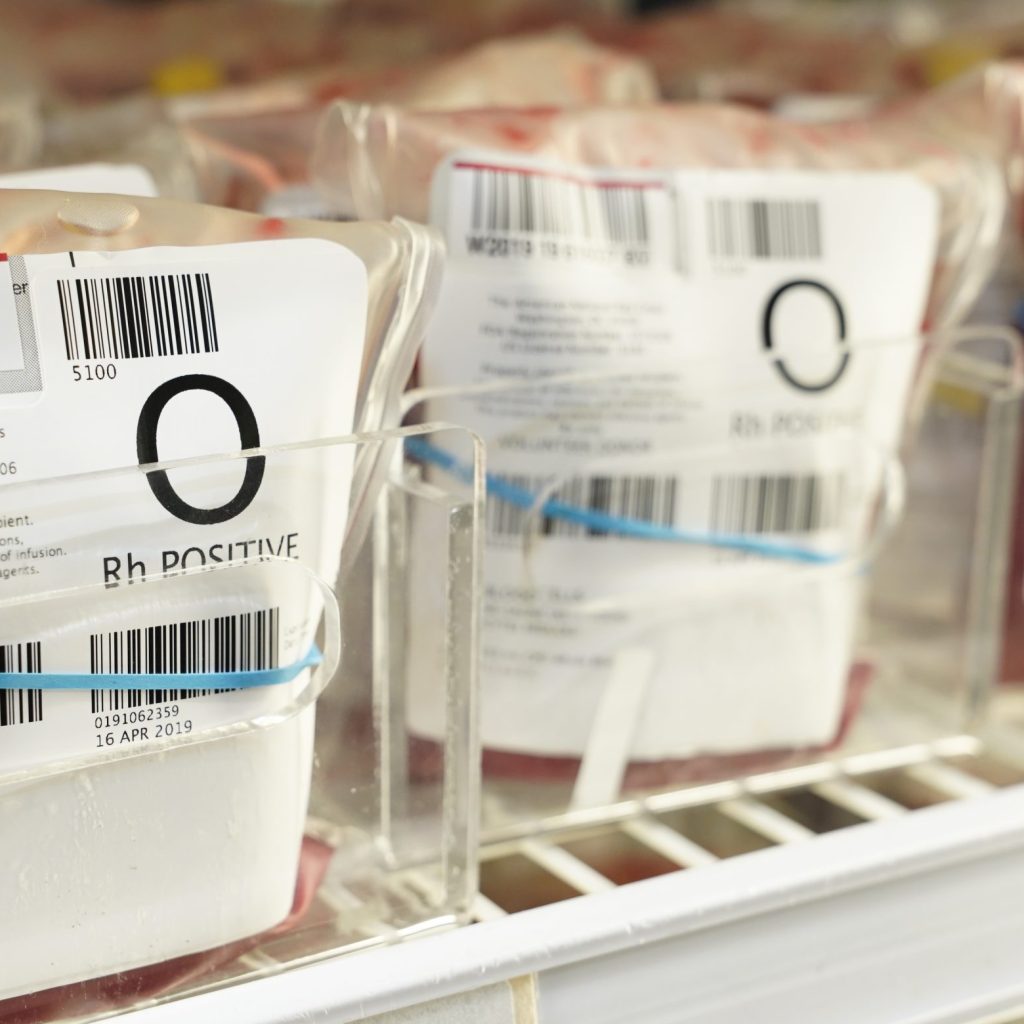
Single-center evaluation of low-titer group O whole blood in non-trauma civilian patients

A Level I academic trauma center recently published clinical and transfusion data regarding the use of low-titer group O whole blood (LTOWB) in adult, civilian non-trauma patients with severe hemorrhage, an area of limited published literature.1 The goal was to see if LTOWB could be safely used with outcomes comparable to previously published data regarding LTOWB use in traumatically injured civilian trauma patients.
This retrospective study examined data from 331 adult patients at the center between April 14, 2018, and December 31, 2024. All patients received LTOWB collected from male donors and thus TRALI-mitigated and having anti-A and anti-B titers less than 200.
There were more male (65.3%) than female (34.7%) patients. Every combination of ABO group and RhD type occurred. Patients were stratified into three groups based on the indication for transfusion–gastrointestinal (GI) bleeding (44%); operative hemorrhage (30%), most often related to cardiothoracic, abdominal, and general surgery; and nonoperative hemorrhage (26%), primarily due to acute cardiovascular disease.
The primary outcome, 24-hour mortality, differed significantly by transfusion indication, with the nonoperative hemorrhage group having higher mortality (Table 1). Thirty-day mortality and days on ventilation did not differ among the groups. Mortality of the entire cohort at 24 hours was 18.7%, which was similar to the rate of 16.3% in an earlier study of whole blood administration to non-trauma patients.2
Table 1. Outcomes by transfusion indication
| Outcome | GI bleeding | Nonoperative hemorrhage | Operative hemorrhage | p values if < 0.05 |
| 24-hour mortality | 15.9% | 30.6% | 12.9% | 0.006 for operative hemorrhage vs nonoperative hemorrhage, 0.014 for GI bleeding vs nonoperative hemorrhage |
| 30-day mortality | 44.8% | 55.3% | 42.6% | (0.181 did not meet statistical significance when comparing the 3 indications) |
| ICU length of stay (median) | 4 days | 3 days | 6 days | 0.014 for operative hemorrhage vs nonoperative hemorrhage |
| WB units transfused (median) | 2 units | 3 units | 4 units | 0.001 for GI bleeding vs operative hemorrhage |
Two delayed hemolytic transfusion reactions (DHTRs) and one mild allergic reaction were reported. One DHTR was due to anti-A in an AB positive patient; the other was due to anti-E from an O positive patient.
Overall, the findings suggest that whole blood may be used safely for rapid resuscitation in non-trauma hemorrhage and may be associated with favorable early outcomes in certain groups. However, the study did not directly compare whole blood to component therapy; and the authors emphasize that further prospective, controlled studies are needed to determine whether LTOWB provides a clear survival advantage.
References
- Fadeyi EA, Cox-Jones J, Staggs J, Alwan A, Saha AK, Crosby AJ, Pomper GJ. Safety and feasibility of cold-stored uncrossmatched whole blood transfusion in civilian non-trauma patients. Transfusion. 2026;66(4):777-783.
- Smith AA, Alkhateb R, Braverman M, Shahan CP, Axtman B, Nicholson S, Greebon L, Eastridge B, Jonas RB, Stewart R, Schaefer R, Foster M, Jenkins D. Efficacy and Safety of Whole Blood Transfusion in Non-Trauma Patients. Am Surg. 2023;89(11):4934-4936.
Author
Written By
F. Bernadette West, M.D.
Regional Medical Director, American Red Cross Connecticut


